
The Rise of Keyless Vehicle Theft
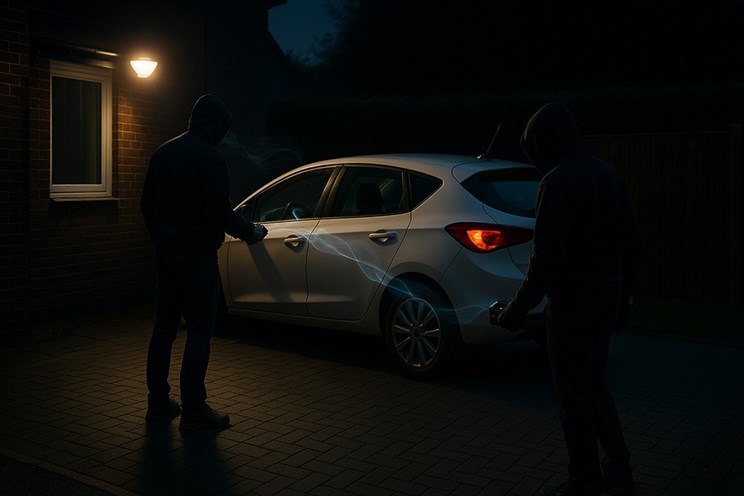
In the past, vehicle theft often involved forced entry, broken locks or obvious damage. Today, criminals are increasingly using technology instead of tools.
One of the most common modern methods is the relay attack — a technique that allows thieves to steal many keyless vehicles without physically accessing the keys.
Keyless entry systems are now widely used across a range of vehicles, including cars, vans, and some motorhomes, which makes this type of theft an increasing concern for many motorists.
How relay theft happens
Relay attacks exploit the wireless signal transmitted by modern key fobs.
Typically, two criminals work together:
One stands near the home to capture the signal from the key fob inside
Another waits beside the vehicle with a relay device
The relay device amplifies the signal and tricks the vehicle into believing the key is nearby. The vehicle then unlocks and starts as normal.
Because there is no forced entry, the theft is often quick, silent, and leaves very little physical evidence behind.
Within minutes, a vehicle can be driven away without broken locks or smashed windows.
The Scale of the Problem
Relay theft is now one of the fastest-growing forms of vehicle crime in the UK.
According to the Crime Survey for England and Wales, between March 2023 and March 2024, 58% of vehicle thefts involved criminals exploiting keyless access technology.
The trend is reinforced by Tracker, Peter Best Insurance’s theft recovery partner, which reported that in August 2025, 98% of stolen vehicles recorded through their system were taken using keyless methods.
These figures show how widespread relay attacks have become across many different types of vehicle.
Victims often only realise what has happened the next morning, when they find their vehicle missing — with no obvious signs of intrusion.
More Than a Financial Loss
The impact of relay theft goes beyond the value of the vehicle itself.
While the financial loss can be substantial, especially for high-value vehicles or specialist models, many victims also report a lasting sense of unease.
Knowing criminals were able to steal a vehicle from outside the home without force or entry can feel deeply unsettling, particularly when the crime leaves no visible trace.
How to Protect Your Vehicle from Relay Attacks
The good news is that there are several practical steps vehicle owners can take to reduce the risk of keyless theft.
Recommended precautions include:
Faraday pouches or signal-blocking boxes: These prevent your key fob signal from being intercepted inside the home.
Physical deterrents such as steering wheel or pedal locks: Visible security devices can make theft far more difficult.
Motion-activated lighting or CCTV: Improving visibility around your driveway or parking space helps discourage criminals.
Secure parking choices: Locked garages, gates, barriers or parking close to the property can restrict easy access.
Reviewing your insurance policy: Confirm your cover includes theft protection for keyless vehicles and that you meet any security conditions.
Using several layers of security together is often the most effective approach.
The Role of Insurance
Comprehensive motor insurance policies generally cover vehicle theft, but insurers increasingly expect owners to take reasonable precautions — especially for keyless vehicles.
Failing to store keys securely or ignoring recommended measures could complicate a claim, leading to delays or disputes.
At Peter Best Insurance, we help ensure your cover reflects modern vehicle risks, including relay attacks and other technology-driven theft methods.
Final Thought
Keyless technology offers convenience, but it also introduces new vulnerabilities. Relay attacks are now a growing concern across the UK for many vehicle owners.
By taking a few simple precautions and ensuring your insurance cover is appropriate, you can significantly reduce the risk of becoming a target.
If you’d like advice on protecting your vehicle or reviewing your policy, Peter Best Insurance is here to help.


