
Why Today's Cars Are Larger Than Ever Before
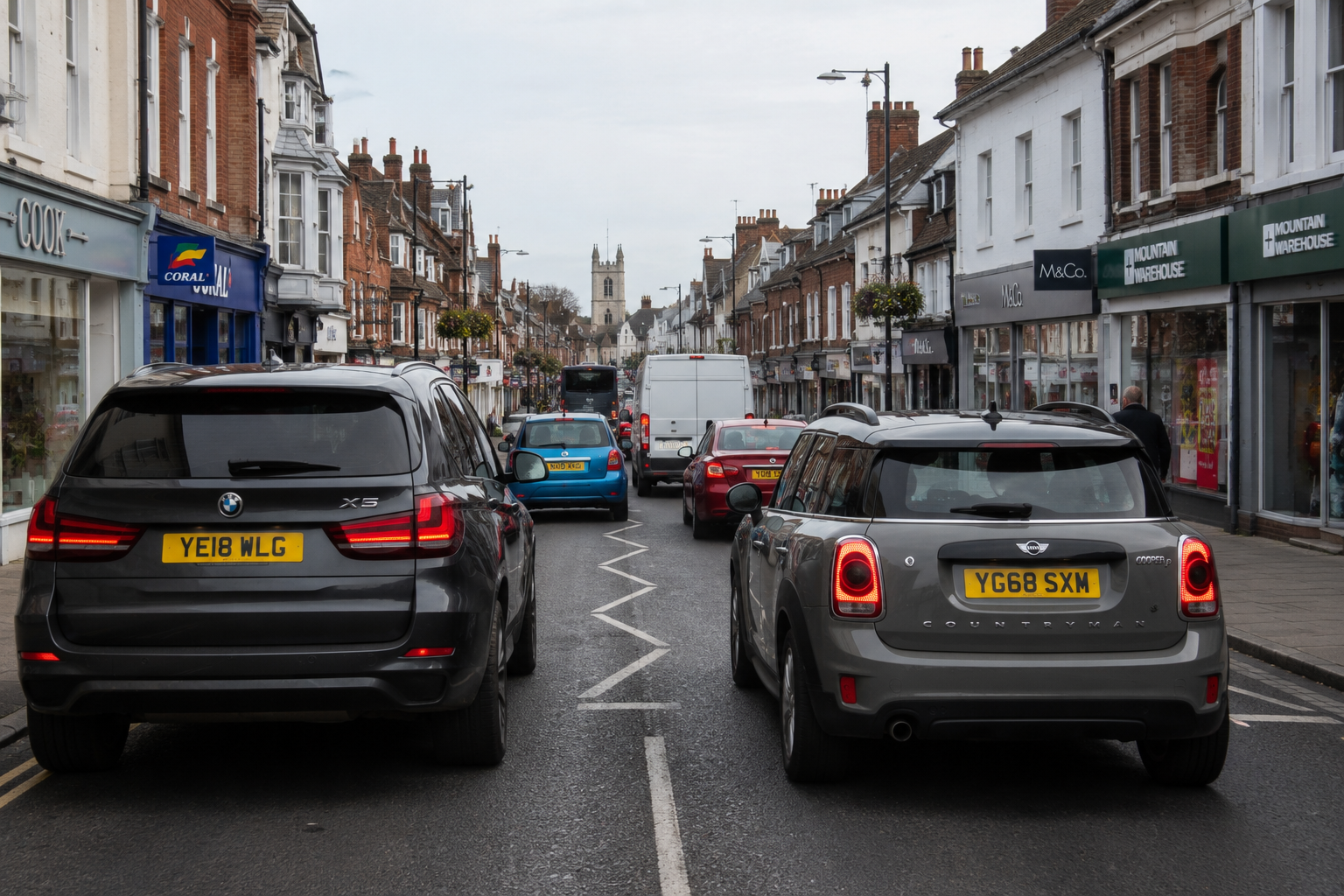
Why Have Modern Cars Become So Big?
A drive on Britain's roads can sometimes feel like a moving history lesson.
Among the sea of modern SUVs, electric crossovers and family hatchbacks, the occasional classic car still appears, offering a glimpse into how different motoring once looked.
What's particularly striking is not necessarily the styling of these older vehicles, but their size.
Cars that were once regarded as spacious family transport can now seem remarkably small beside modern traffic. Even estate cars from the 1970s and 1980s often look narrow and compact when compared with today's vehicles.
So why have cars become so much bigger?
The explanation lies in a combination of safety requirements, consumer preferences, technological development and changing market demands.
The Mini That Grew Up
Few vehicles illustrate the trend better than the Mini.
Designed by Alec Issigonis and launched in 1959, the original Mini became famous for making exceptionally efficient use of a very small footprint. At just over three metres long and weighing around 600kg, it offered practical motoring in a compact package.
The modern MINI Hatch still carries many of the styling features that made the original instantly recognisable, including its distinctive profile and signature headlights.
Yet in physical terms, it is a very different vehicle.
Today's MINI is considerably longer, wider and heavier than the car that inspired it.
The same pattern can be seen throughout the industry.
The current Fiat 500 is significantly larger than the tiny city car that first wore the badge, while the new Renault 5 E-Tech borrows heavily from the styling of the original Renault 5 despite being substantially bigger and heavier thanks to modern engineering and battery technology.
Cars Have Gained Both Size and Weight
Research from vehicle specification archives and industry sources suggests that many modern family cars are now between 15% and 30% larger than comparable models from four or five decades ago.
Weight has increased significantly too.
Where an average family hatchback from the early 1980s might have weighed between 800kg and 950kg, many modern equivalents now weigh between 1,300kg and 1,700kg.
Electric vehicles can add even more mass due to the weight of their battery packs.
A few examples help illustrate the scale of the change:
An original Mini typically weighed less than 650kg
A modern MINI Cooper can exceed 1,300kg
A Ford Cortina estate from the 1980s weighed approximately 1,100kg
Many modern SUVs weigh more than 1,800kg
These increases influence much more than appearance. Additional weight affects tyre wear, braking performance, efficiency and even the rate at which road surfaces deteriorate.
Why Have Vehicles Expanded?
There is no single factor responsible for larger cars.
Instead, several developments have gradually pushed vehicle dimensions upwards over the years.
Safety Improvements
Perhaps the most significant reason is safety.
Modern vehicles incorporate reinforced passenger structures, crumple zones, side-impact protection, multiple airbags and sophisticated electronic safety systems.
All of these features require space and contribute additional weight.
The result is a vehicle that offers dramatically better occupant protection than a typical car from the 1970s.
Independent safety programmes such as Euro NCAP have also encouraged manufacturers to continually improve crash performance.
Greater Comfort and Convenience
Drivers expect considerably more from their vehicles today.
Features such as air conditioning, touchscreen infotainment systems, electric adjustment mechanisms, advanced soundproofing and driver-assistance technology are now commonplace.
Larger seats, increased storage space and more generous cabin dimensions have also become selling points for many buyers.
The growing popularity of SUVs and crossovers reflects a preference among some motorists for a higher driving position and increased practicality.
Electric Vehicle Packaging
The move towards electrification has introduced new challenges.
Battery packs can add substantial weight to a vehicle, even in smaller models.
To accommodate these batteries while maintaining usable cabin and luggage space, manufacturers often increase overall vehicle dimensions.
Market Evolution
Vehicle categories have shifted considerably over time.
Many modern superminis now offer the interior space once associated with family hatchbacks.
Meanwhile, the introduction of crossover vehicles created an entirely new segment between conventional hatchbacks and larger SUVs, helping reinforce the perception that bigger vehicles offer better value.
When Modern Cars Meet Old Parking Spaces
The growth in vehicle size has exposed one issue that few planners anticipated decades ago.
Much of Britain's parking infrastructure was designed when cars were significantly smaller.
Many multi-storey car parks built during the 1950s, 1960s and 1970s still feature parking bays based on the dimensions of vehicles from that era.
The British Parking Association notes that some older spaces remain around 2.3 metres wide.
By comparison, many modern vehicles approach two metres in width before mirrors are even considered.
As a result, fitting a large SUV into some older parking spaces can feel like threading a needle.
Modern Bumpers, Modern Problems
One area where modern cars have improved significantly is their ability to cope with minor impacts.
The chrome bumpers found on older vehicles could dent, rust and deform relatively easily. Modern bumper systems use flexible materials and energy-absorbing designs that are far more resistant to everyday knocks.
This is particularly useful in busy car parks where space is limited.
However, there is a trade-off.
Behind many modern bumpers sits a network of sensors, cameras, radar units and driver-assistance technology.
While a minor bump may leave little visible evidence, hidden damage can still occur and electronic systems may require repair or recalibration.
This is one reason repair costs have increased significantly in recent years.
From an insurance perspective, understanding the complexity of modern vehicles has become increasingly important, particularly as advanced driver-assistance systems and electric vehicle technology become more widespread.
Looking at the Road Ahead
The sight of classic cars among modern traffic provides a fascinating reminder of how quickly motoring evolves.
Vehicles that once felt large now appear compact, yet many drivers still wish for more interior space and larger boots.
Perhaps the greatest irony is that while countless consumer technologies have become smaller and more compact over the years, the family car has steadily expanded in the opposite direction.
And if you happen to find an old Cortina parked in a traditional multi-storey car park, chances are it will still have far more room to open its doors than many of today's vehicles.


