
Spooky Season Stats: Home Safety Facts for Autumn Nights
Dark Nights, Fireworks and Autumn Home Safety: What to Look Out For
Autumn brings plenty to enjoy: crisp evenings, Halloween decorations, Bonfire Night celebrations and cosy nights at home.
It also brings a few seasonal hazards.
From candles and fireworks to portable heaters, electrical decorations and darker evenings, there are some additional risks worth considering around your home at this time of year.
Here are some practical ways to help keep your property, belongings and family safer this autumn.
Pumpkins, candles and Halloween decorations
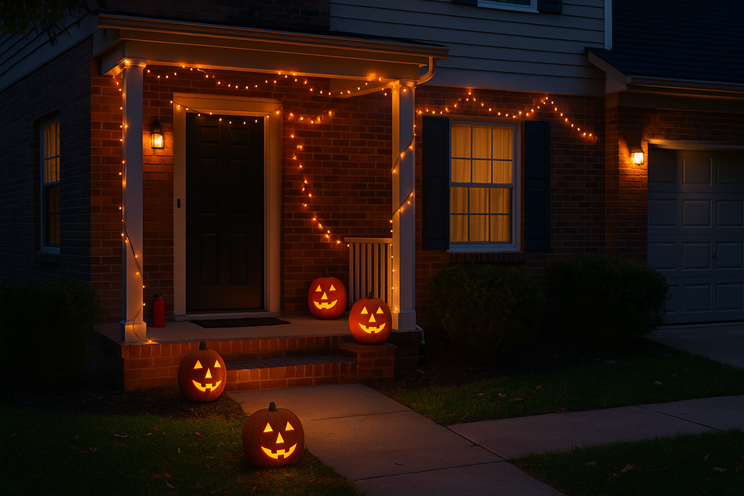
A glowing pumpkin is part of the Halloween tradition, but placing a real candle inside one introduces an open flame into displays that can often include paper, fabric and other combustible decorations.
Battery-operated LED candles can give you the same Halloween effect without a naked flame.
If you prefer traditional candles:
Keep them away from curtains, decorations, furniture and dry leaves.
Place them on a stable, heat-resistant surface.
Keep children and pets away from them.
Never leave a burning candle unattended.
Put candles out before leaving the room or going to bed.
Take particular care around Halloween costumes. Loose or flowing fancy-dress material can catch fire if it comes into contact with a candle or another naked flame.
Bonfire Night: fireworks remain a serious fire risk
Bonfire Night continues to be an exceptionally busy period for the emergency services.
On 5 November 2025, London Fire Brigade received 831 calls – its highest number on Bonfire Night since 2016 and 20% more than in 2024. Incidents included an out-of-control bonfire, a flat fire reportedly caused by fireworks and fires involving trees and outdoor areas.
Firework injuries can also be serious. Figures compiled by the Care of Burns in Scotland network showed that 46 people attended hospital for treatment following firework injuries during a four-week period, with nearly half requiring plastic surgery or other specialist healthcare.
Where possible, fire and rescue services recommend attending an organised public fireworks display.
If you are holding your own celebration:
Buy fireworks from a reputable, licensed retailer.
Read and follow the Firework Code and manufacturer's instructions.
Keep fireworks well away from homes, garages, sheds, fences and trees.
Never return to a firework after it has been lit.
Keep spectators at at the recommended distance.
Have water readily available in case it is needed.
Bonfires should also be positioned well away from buildings, fences, hedges and other combustible materials and should never be left unattended.
Don't forget about sparklers
They may be smaller than fireworks, but sparklers still burn at extremely high temperatures and can cause significant burns.
If you're using them:
Always supervise children.
Wear gloves.
Hold sparklers at arm's length.
Keep them away from clothing and other people.
Never give sparklers to very young children.
Put finished sparklers straight into a bucket of cold water.
Check your lights and electrical decorations
Halloween decorations, outdoor lighting and other seasonal displays may mean using electrical equipment that has been stored away since last year.
Check plugs, cables and lights for damage before using them again.
Avoid overloading sockets and don't connect multiple extension leads together. Any electrical lights or extension leads being used outside should also be designed for outdoor use.
If something looks damaged, don't take the risk of plugging it in.
Using a portable heater? Give it some space
As temperatures fall, portable heaters often start being used again.
Keep heaters well away from anything that could catch fire, including:
Curtains and blinds
Bedding
Clothing
Upholstered furniture
Paper and cardboard
Check heaters and their cables for signs of damage before use, place them on a stable surface and don't leave them operating unattended or while you're asleep.
When did you last test your smoke alarms?
Your smoke alarms are one of the most important pieces of safety equipment in your home.
Government fire-safety guidance recommends testing them at least once a month. If you have alarms powered by replaceable one-year batteries, those batteries should be replaced every year. Sealed ten-year alarms should be replaced in line with their manufacturer's instructions.
The guidance also recommends having at least one smoke alarm on every level of your home.
The changing season can be a useful prompt to check that yours are working properly.
Darker evenings and home security
By late autumn, it can be dark before many people arrive home from work.
Historical Crime Survey for England and Wales data found that approximately three-fifths of domestic burglaries in dwellings occurred during the evening or night, between 6pm and 6am.
That doesn't necessarily mean that shorter days themselves cause burglary, but darker evenings make this a sensible time to review your home's security.
A few straightforward precautions can help:
Lock doors and windows: Do this whenever you leave, even if you're only going out briefly.
Use lighting timers: Timed indoor lights can make an empty property appear occupied.
Consider outside lighting: Motion-activated lights can illuminate entrances, paths and side access.
Keep keys out of sight: Avoid leaving them near doors, windows or letterboxes.
Secure garages and sheds: Check locks and gates as well as the main house.
Keep valuables away from windows: Don't make expensive belongings unnecessarily visible from outside.
Be careful on social media: Think before publicly sharing that you're away from home.
Interestingly, the same ONS data found that someone was at home in more than half of domestic burglaries where an offender gained entry, so security shouldn't only be a consideration when your property is empty.
Check what's stored in your garage or shed
As summer comes to an end, more belongings tend to move into garages and outbuildings.
Bicycles, power tools, garden machinery, furniture and leisure equipment can add up to a considerable value.
Check that sheds, garages and gates are properly secured and think about what you're storing there.
It's also worth checking your home insurance policy to understand the cover and limits that apply to possessions stored in garages, sheds and other outbuildings, as these can vary between insurers and policies.
Does your home insurance still meet your needs?
Autumn can be a useful prompt to review your home insurance more generally.
Rather than assuming particular events or possessions are automatically covered, check your policy documentation and make sure you understand the cover, limits and exclusions that apply to you.
Things to consider include:
Accidental damage:
Accidental damage isn't necessarily included in every home insurance policy and may be an optional addition.
If you're hosting Halloween or Bonfire Night gatherings, it may be worth checking what your policy provides.
Theft and malicious damage:
Check the circumstances in which your buildings and contents insurance covers theft or malicious damage and whether there are any security requirements attached to your policy.
Outbuildings:
Contents kept in sheds, garages and other outbuildings may have different limits or conditions from belongings kept inside your home.
Valuable belongings:
Some higher-value possessions may need to be individually specified.
If you've made significant purchases since you last reviewed your policy, check whether the level of cover you have remains appropriate.
Changes to your property:
If you've renovated, extended or otherwise significantly changed your home, contact your insurer or broker if you're unsure whether the changes need to be declared.
A little preparation can go a long way
Halloween and Bonfire Night should be about enjoying the season, not dealing with an avoidable accident or incident.
Swapping open flames for LED candles, checking seasonal electrical equipment, taking care with fireworks, testing smoke alarms and reviewing your home security can all help reduce some of autumn's household risks.
And while you're making those checks, it can also be a good opportunity to make sure your home insurance still reflects your property and possessions.
Need to review your home insurance?
If you have questions about your existing home insurance or your circumstances have changed, contact the Peter Best Insurance Services team and we'll be happy to help.
Cover, limits, exclusions and eligibility vary by insurer and policy. Please refer to your policy documentation for full terms and conditions.
Sources
London Fire Brigade – Bonfire Night incident data, November 2025
Scottish Fire and Rescue Service / Care of Burns in Scotland – firework injury statistics
GOV.UK – Fire safety in the home
Office for National Statistics – Overview of burglary and other household theft


